The Ugandan Quidditch Movement
In Uganda, a new sport is driving social change. It is boosting school attendance and providing a unique space for girls and boys to play side-by-side. The sport is quidditch, and the small rural village of Katwadde is about to host the country’s first-ever national tournament.
Interview with the Director - Ben Garfield
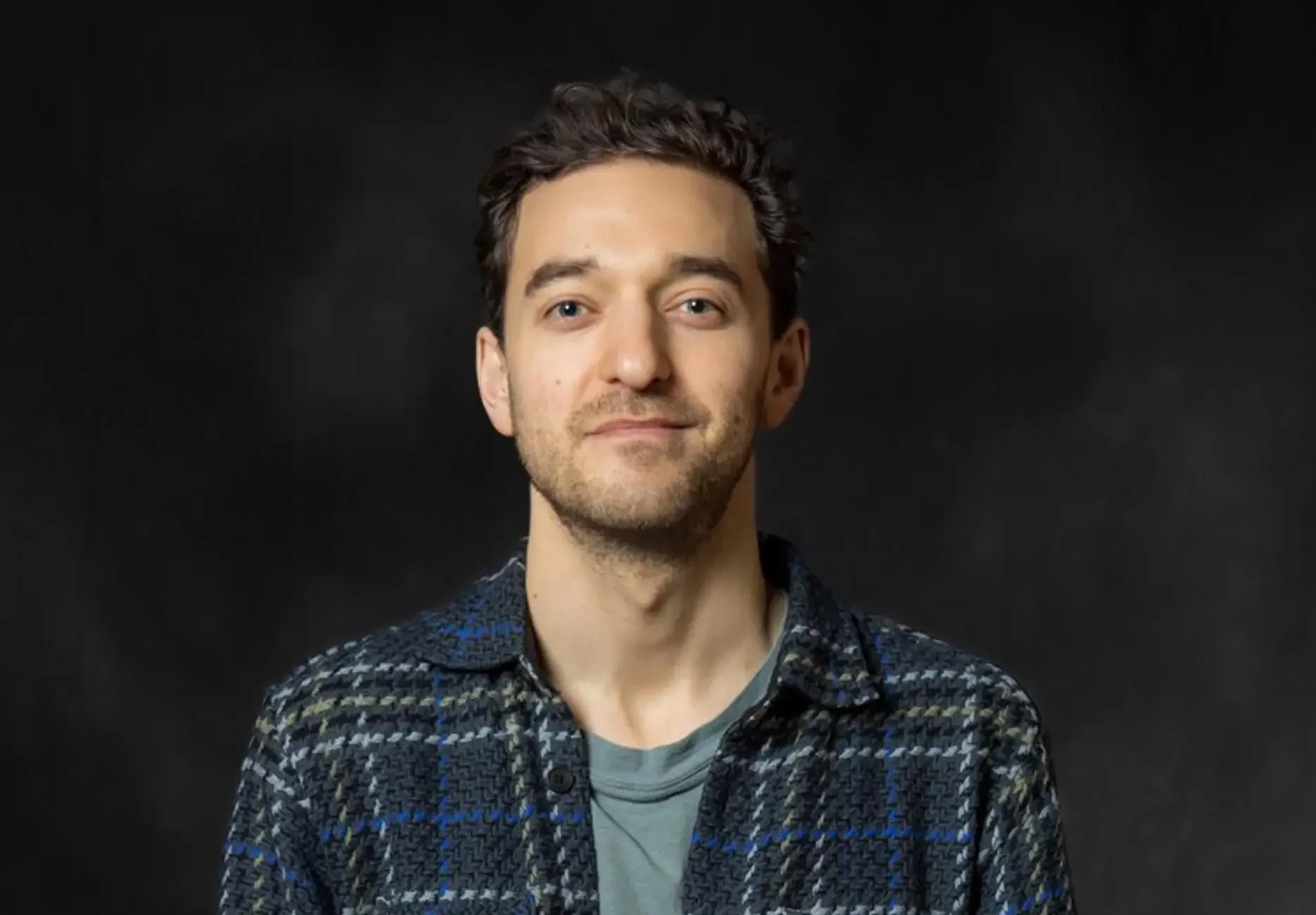
Tell us a little bit about yourself and your background in film making.
I became interested, I suppose, in the idea of filmmaking when I was a teenager, and I used to watch a lot of music videos, and then at one point, a series of box set DVDs came out, which focused on music video directors. And it hadn't really crossed my mind before that just quite how much the Director of Music Video like … that's a kind of way of a creative outlet, I suppose, and an artistic expression. And it was such, such great directors. It was Spike Jones, Michel Gondry, Jonathan Glaser and Chris Cunningham were the first in that series … I thought, oh, filmmaking could be fun, but I didn't really pick it up until later on.
I ended up studying drama and film at Manchester University in the UK, which was a theoretical film course. It wasn't a practical film course on how to make films. It was about analysing films, and I very much leaned on the film side. Great couple of great teachers, one of which specialised in documentary, and he, in particular, kind of inspired me on that work … it was kind of where filmmaking meets sociology and anthropology and things like that, which I was always been interested in … I'm actually studying a psychology Master's part time at the moment. So, yeah, all those things kind of connect together for me, that's how I got into it.
After I left uni, I got a camera at the time, it was Canon 5D which, for those who were around at that time making films, it's quite an iconic camera, because it was the first DSLR stills camera that recorded HD and could do so at quite a good budget. And it was also just a time when videos were becoming a big part of what was on social channels for the first time. They were starting to appear them, and people were realising, companies and such, were realising it was helpful to have videos on a website. So without going into all the detail, just to say that that was kind of quite a good time to just kind of have a camera and start figuring things out. I made a few short films, which originally were fiction, and then I started to get some commissions of those, and those are mainly documentary, and I suppose also in the background that I had with the professor who Johannes Sjoberg is his name. Kind of all that kind of came together, and I realised that was the direction I wanted to go in.
How did the the Ugandan Quidditch Movement first come together as a project?
So I was walking in a park near where I live, a park called Hampstead Heath, and I saw some guys and girls playing a sport, and it was kind of off in the distance. And I thought, is that what I think it is? And I got close, and it was indeed real life Quidditch, and it was the first time I'd encountered it. And I thought, that's pretty interesting. I took a photo, and I think I might have shared it with a couple friends. And then I thought, ‘well, I wonder what stories there might be in the world of real life Quidditch’. And so I started researching online, and I found out that there was a World Cup, and then the question became, who are the underdogs for this? And I found out that the Ugandan national team, the Ugandan community of Quidditch players, had been trying to get to the World Cup unsuccessfully, but it meant there was info online.
I found their Facebook page, and I reached out, and then I got instant reply. And then I was chatting to John on a video call within a few days. And John, being John, as you will have seen in the film, is just such an, such a charismatic and wonderful human being. When he started to explain what he's doing and the reason for Quidditch and introducing education to the community and everything now, I was just like, ‘wow, this is so clearly about so much more than just a sport’, and an interesting sport at that. And then, you know, when he explained about how it's helped to this, introducing the sport has helped to encourage children to go to school and then also address the issues around gender and gender equality.
So I put together a pitch deck, and then I started to pitch it to places. And I thought Atlas Obscura, who did commission film. I thought it could be up their street, although they hadn't done sort of too many film projects, certainly not like this, where it's about commissioning a film project. And they sounded really interested. We had a couple of calls, and then I didn't hear anything from them for a while, for three years, in fact. There was a pandemic in that time, to be fair. But also it was just kind of because they didn't really do film stuff yet, and then they got in touch and said ‘Right, we're doing film stuff, and we would love to commission this project’. So that was, like, quite out of the blue for me. We went and did it, and worked very closely, collaborated very closely with them, with Doug Baldinger, who commissioned it, and is one of the producers on the project. So it was kind of from from there on. It was very much a kind of strong creative collaboration of making the project happen.
Looking at your past work, whether it’s War & Cheese or Spelliasmous, you’re often pulled to less-travelled part of the world to make your films. Is there something about these places that draw you in?
Yes, I think I'm kind of always drawn to things which are sort of intriguing.
Both those projects came about in different ways. I am absolutely very interested in just exploring different cultures around the world, and the kind of cross-section between cultures is a kind of recurring theme. Spelliasmous is also about Harry Potter and what it means to young people in Cuba, in particular, a group of young friends who live in a small town, and what the stories mean to them, and what the characters mean to them. And obviously, real life Quidditch and in Uganda, that's quite an interesting thing, and kind of the impact it's having there. There are different cultures coming together in all of that. And then War & Cheese, it's that's about an entrepreneur cheese maker in Russia who's seizing the opportunity to make Western cheeses, which were banned from being imported into Russia as the tensions between Russia and the West built up, and he named his factory Russian Parmesan. And it's having a go at making all these cheeses, such as that one.
I've always been kind of quite interested in how one thing in one culture can mean something quite different in another, and also how things that can maybe seem a bit strange to a cultural outsider or an outsider in general, can obviously make perfect sense to the people behind them. And so that sparks my curiosity. And then, if once I've looked into it, it feels like it really speaks to me and there's a great story there and great protagonists and such, then that's a line of inquiry I have explored. There is a kind of thread there, yeah.
It always comes down to the human stories behind it, and the complexities behind that. The stories that we tell, and the kind of things in that realm can be quite abstract, and then how those abstract aspects meet real human endeavour and human stories of people doing what they're doing in the world with great passion and conviction. I think that's really interesting thread to follow a lot of the time. So that's something which attracts me. It's always an amazing privilege to be able to go to these places and meet people and get a kind of insight and window into people's lives and and the cultures there through these projects. And that's a very rewarding thing to do.
Further on the point of your past work, you have a great way of portraying childhood and the joy of adolescence in your films and docos. Is there a particular mindset you have as a filmmaker when working with young people?
I tell you this, so one of those films you mentioned before. Spelliasmous, that was made on a workshop with Werner Herzog, who is extraordinary filmmaker, an amazing character and person, just what he's achieved, and the kind of scope of the projects he takes on, and how he goes about them, is just extraordinary.
He had some advice for me when I told him that I was going to make a film with some children or young people, and that was to be a co-conspirator. So we're doing a conspiracy, and we're all co-conspirators, so we're all in this together. And I think that's fantastic advice. So when it comes to working with young people, I think being on the level, or just being on a level where you're just being real with each other and making it fun. We're here. We're doing this thing, we're making this film, we're telling this story, we're doing what we're doing. That's how do we kind of collaborate and make it fun and interesting.
I just think young people just have those kind of worlds, frequencies in which they sort of operate on, in terms of the way that they experience and share reality,[and it’s] something which can be so beautiful and just so full of a kind of joy and just an authenticity as well that as adults, all too easily, can fade for us. I'm very grateful for the for the young people I've worked with, for sharing that with me on various projects.
You chose to forgo narration in this and let John really take charge as the main voice in the story. Is there a particular reason for the choice versus inserting your own voice?
It felt to me like the responsibility of this project was to just to try and get on the wavelength of John and the other people in the film, in the community, and for the film to be a way of sharing that.
I think there's kind of two aspects of it. I think, one is to kind of share what's going on there, so that the rest of the world can … if it speaks to them, then thaty’s something they can get something from. But then also bring a spotlight to [the Ugandan community], back to them, because they are working with limited means.
We did a little fundraiser to support the … well, it ended up being little, I shouldn't really say little, because the ambition was for it to be maybe bigger than that, but it didn't really … it hasn't really gotten as much attention as I would hoped. But the idea was also that we were able to support them and give them something which they can share to support their efforts going forward.
These things can become a bit, you know, when you're telling a story and then also, there's a desire to support the community. Money leads to resource, leads to them being able to do the work they're doing, supporting education and the development and so, yeah, so maybe this is a moment to plug that fundraiser. There is a fundraiser which is up online, if anyone feels that they would like to contribute. John has had another kind of ingenious idea to develop a chicken poultry farm in the school, which will be a way of generating sustainable income for the school, and also offer the children new educational opportunities with learning about farming and animals, and I guess also knowing John, they'll get insight into the business sides of things.
When dealing an inherently wacky story like a Quidditch team in Africa, it would be easy to turn it into a more comedic piece, but you keep a great sense of respect and dignity throughout along with the laughs. How did you balance those two elements while making the film?
I think part of it is just how I experience what is happening now, I think that the kind of wacky aspect of it is part of the draw. That's how I found them, the Quidditch thing. But then, you know, the respect and dignity. That's because there's so much respect and dignity there. It's all respect and dignity, so it was just a case of being faithful to what was actually there. It's kind of how I see it. I think it's just such beautiful work that's happening now, so we were just trying to be honest with that, which was all we ever wanted to be anyway, because that's what struck me as being an engaging film to watch as well.
What future projects are coming down the pipeline for you?
I've got a few things which are in the works, though nothing is quite developed enough, actually, that it would be right to sort of talk about it. But there are a few sifferent things. Is there anything more I can say about those? Probably not. So watch this space.
Any message for our fans here in Melbourne?
Hello and thank you so much for well in the first place, for selecting this film to be shown, and for taking the time to watch it. I'm very grateful for that and hope you enjoy it, or don't enjoy it, or get out of it, whatever you get out of it, and I think that's what it's all about.